Software
Multi-Ticket Association & Management in HubSpot
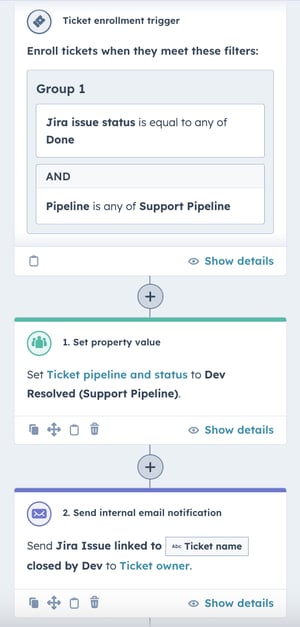
Simple Strat configured a bidirectional HubSpot Tickets and Jira integration that automatically pushes new issues to the dev team's Jira board, syncs status changes back to HubSpot, and notifies ticket owners when a Jira issue is closed, giving CX and development teams a single, connected workflow.

The Challenge
Managing multiple bug and support tickets tied to a single issue in Jira was inefficient and frustrating for the client. They faced:
-
Disjointed communication between customer service and development teams, causing delays in issue resolution
-
Manual effort required to keep both HubSpot and Jira updated, leading to inconsistent information
-
Lack of visibility into related Jira issues from HubSpot, slowing down the ticketing process
-
Missed updates for clients on their submitted issues, threatening trust and satisfaction
The Solution
-
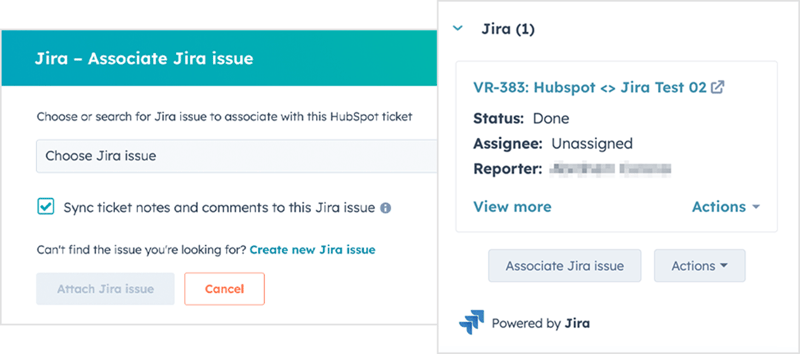
Built out a custom Jira integration for multi-ticket tracking.
-
Automated the process of syncing ticket status changes in HubSpot with Jira, notifying ticket owners of updates.
-
Configured the integration to push all Jira issues created in HubSpot directly to their Dev team’s Support board.
The Impact
-
CX support team can now work out of a single platform.
-
Customers are now consistently updated on their submitted issues.
-
Seamless cross-department collaboration between CX and Dev teams.
-
Increased efficiency in managing and resolving customer issues.

FAQ
How do you keep HubSpot support tickets and Jira development issues in sync without manual updates?
A HubSpot-Jira integration with automated status syncing means a status change in Jira triggers an update in HubSpot automatically — no one has to update both systems manually.
Without integration, support and development teams end up working from separate records that diverge the moment either side makes an update. The HubSpot-Jira integration keeps both platforms aligned by pushing status changes bidirectionally — when a Jira issue moves to Done, HubSpot reflects that immediately and notifies the ticket owner. The support team never has to chase the dev team for an update, and customers get timely, accurate communication about where their issue stands.
Can a HubSpot ticket automatically create a Jira issue and assign it to the right development board?
Yes — when a ticket meets defined criteria in HubSpot, the Jira integration can create a linked issue and push it directly to the correct board, with no manual handoff between teams.
The configuration uses ticket properties to determine when a Jira issue should be created and where it should land. Once the integration is in place, the CX team works entirely out of HubSpot while new issues appear automatically in the dev team's Jira board. This removes the handoff gap where tickets sat waiting for someone to manually create the corresponding Jira issue. Simple Strat, a HubSpot Diamond Solutions Partner, builds these cross-platform integrations for SaaS support teams that need their CX and development functions to operate as one connected workflow rather than two separate systems.
What's the customer experience impact of poor ticket visibility between support and development teams?
Customers notice the gap before internal teams do — slow updates, conflicting information, and repeated follow-ups are all symptoms of a support process where the two sides aren't connected.
When the CX team can't see what's happening in Jira, they have two options: go dark on the customer until they hear back from dev, or follow up internally every time a customer asks for an update. Neither is sustainable, and both create friction that damages trust. An integrated ticketing system means the CX team always knows where a Jira issue stands, can update the customer proactively when the status changes, and never has to chase an internal team for information that should be surfacing automatically. For SaaS companies where support responsiveness is a differentiator, that visibility is a retention issue, not just an operational one.