Software
How Sequence Reporting Turned Zero Replies Into Booked Meetings
When a carefully built outbound campaign returned zero replies and zero meetings, Simple Strat diagnosed the problem, ran a structured test, and found the fix.

The Challenge
The client had done everything right on the front end. Their team spent significant time building lists of contacts specifically in roles with purchasing power. They built the sequences, launched the campaign, and waited. The results came back with zero replies and zero meetings booked.
For a vertical the company was actively investing in, that was alarming. The lists were good and the contacts were right, but something about the way the message was being delivered wasn’t working. And with that much list-building effort behind it, the team needed to understand why before writing off the channel entirely.
The Solution
Rather than pulling the campaign immediately, the team let the sequences run to completion to collect full performance data before drawing conclusions.
Once the results were in, the diagnosis was clear: the original sequences were content-heavy. It was well-written, thorough, genuinely useful content, but in a one-to-one cold outreach context, that format works against you.
The Setup
The send groups were split and two new sequences were built in parallel. The first was a trimmed version of the original — same core message, significantly less content.
The second went further: a shorter sequence that moved the call to action to book a meeting into the very first line, removing any assumption that a cold contact would read through to find it.
The Engine
HubSpot sequence reporting tracked performance across all three versions simultaneously, looking specifically at enrollments, opens, clicks, replies, and meetings booked.
The data made it possible to compare not just whether contacts were engaging, but at what point in the email they were dropping off, and which format was prompting action.
The Impact
Replies and meetings booked started coming in within a day or two of the new sends.
Across all sequences this quarter, the team enrolled 2,993 contacts, generating 1,305 opens, 736 clicks, 20 replies, and 3 meetings booked.
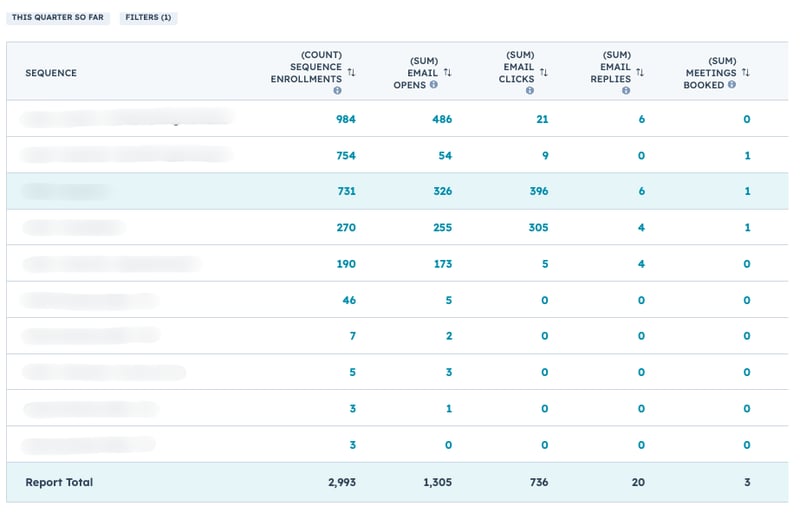
The turnaround confirmed what the data suggested: these contacts weren’t going to read long-form content in a cold email, regardless of how relevant or well-written it was.
Moving the CTA to the first line and cutting everything that wasn’t essential was what finally moved people to respond. That format is now the baseline for outbound in this vertical going forward.

FAQ
Why are my HubSpot sequences getting opens but no replies?
Opens tell you the subject line is working, but no replies usually mean the email itself isn’t giving people a clear reason to respond.
The most common culprits are email length, CTA placement, and message complexity. Cold contacts aren’t going to read through a detailed, content-heavy email to find out what you’re asking them to do. If your CTA is buried in the third paragraph, most people will never get there. The fix is usually to shorten the email significantly and move the ask to the first or second line. It feels counterintuitive when you’ve put real thought into the content, but in a one-to-one cold outreach context, brevity and clarity outperform thoroughness almost every time. As a HubSpot Diamond Solutions Partner, Simple Strat helps B2B teams use sequence reporting to diagnose exactly where contacts are dropping off and rebuild their outreach around what works.
How do you use HubSpot sequence data to improve outbound performance?
HubSpot sequence reports show you exactly where contacts are dropping off. Opens without replies mean the email body isn't working, low opens mean the subject line is the problem.
HubSpot tracks enrollments, opens, clicks, replies, and meetings booked at the sequence level, giving you a clear picture of where contacts are engaging and where they’re falling off. High opens with low replies usually points to a content or CTA problem. Low opens points to subject lines or send timing. The most effective approach is to run parallel sequences with one variable changed at a time, so you can isolate what’s actually driving the difference. Simple Strat uses this methodology to help clients move from gut instinct to data-backed outreach decisions, so every iteration of a sequence is smarter than the last.
How long should a B2B cold outreach email be?
Shorter than you think — and with the ask in the first two lines.
Cold outreach to senior buyers works differently than marketing emails or nurture sequences. These are busy people who get a lot of outbound, and they’re not going to read a detailed value proposition in an email from someone they don’t know. The goal of a cold sequence email isn’t to close, it’s to get a reply or a booked meeting. That means leading with the ask, keeping the supporting context to two or three sentences at most, and making it genuinely easy for the person to say yes. The content you cut from the email doesn’t disappear; it belongs in the conversation that follows. Simple Strat works with B2B sales teams to build sequences that are optimized for that first response, not a complete pitch.
Last updated: October 22, 2026