
October 26, 2026


*Disclaimer: A few features referenced here were in beta status at the time of writing.*
If you've noticed your website generating less traffic than it used to, you're not alone. Organic search clicks drop by 34.5% when an AI overview appears at the top of results. Meanwhile, 94% of B2B buyers are using LLMs as part of their buying process, and only 41% of online content is trusted by the people reading it.
The old playbook was straightforward: build a site, rank for keywords, capture leads. That playbook is broken. Buyers arrive better informed, more skeptical, and further along than they used to be. The website that worked in 2020 wasn't built for that buyer.
The good news is there's a clear framework for fixing it.
HubSpot introduced it as Loop Marketing, and it maps directly to what modern B2B websites need to do to drive results: Express, Tailor, Amplify, Evolve. Each step plays a crucial role, and HubSpot has rolled out a variety of tools that help you get them all right.
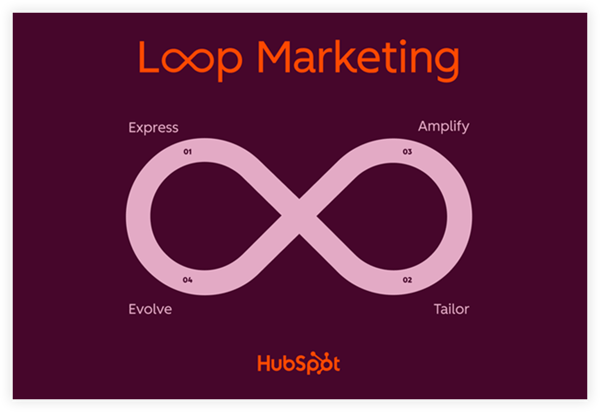
Express: Make Your Brand Impossible to Ignore
With 74% of new web content containing at least some AI-generated material, the bar for standing out has never been higher. AI slop won’t stand out, at least not in the way you want your website to. The brands winning right now are the ones that feel unmistakably human.
Here are two things that’ll help you express what makes your brand unique:
Brand consistency across every page. Your tone, language, and point of view need to be consistent whether someone lands on your homepage or a blog post from 2023. HubSpot's Brand Identity tool makes this more achievable at scale. It stores your brand voice, personality, tone, and even how you think about your competitors, and every AI content tool in HubSpot references it automatically. That means even AI-generated first drafts of new pages start off already sounding like you.
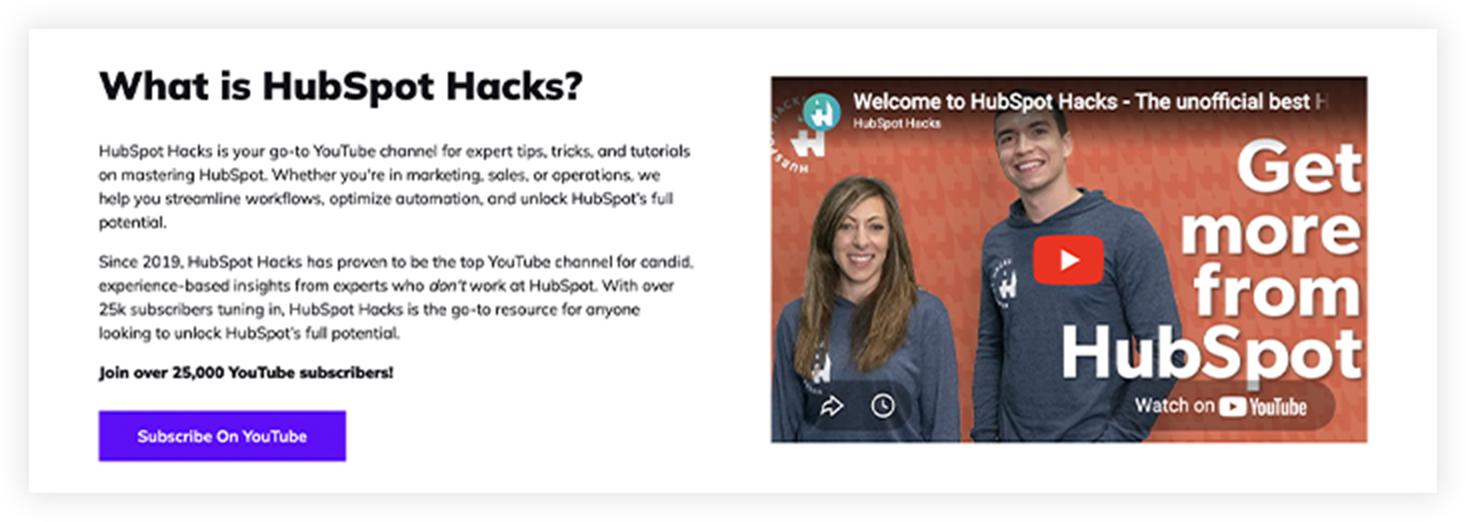
Video that proves there are real people behind the brand. An authentic video of someone on your team talking through a real problem is worth more than a polished explainer animation right now. HubSpot's updated video hosting gives you consolidated reporting across every place a video is embedded: blog posts, landing pages, social, etc. Plus, its built-in clip extraction tools help you do things like turn a single recorded conversation into multiple pieces of content with ease.
The question isn't whether your brand looks good, but whether a stranger could tell you apart from your top three competitors after 30 seconds on your site. If the answer is uncertain, it's usually because brand expression is being treated as a design decision rather than a conversion strategy.
Tailor: Stop Talking to Everyone the Same Way
If a buyer interacts with you 16 times before purchasing and all 16 of those touchpoints deliver the same generic message, you've wasted the relationship. Tailoring your website experience means using what you know about a visitor to show them something more relevant than what everyone else sees.
Three capabilities make this real on a HubSpot site:
- Smart CTAs: The call-to-action someone sees on your homepage or service pages shouldn't be the same for a cold visitor as it is for a known contact who's already been on three calls. Smart CTAs change based on lifecycle stage, list membership, UTM parameters, and more. Across the hundreds of portals we’ve worked with, fewer than 20% of Smart CTA slots are configured. That's a significant amount of personalization left on the table.
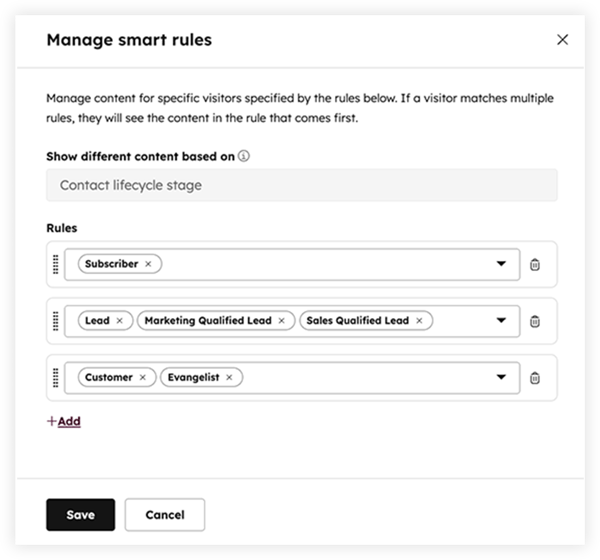
- CRM-connected page personalization: HubSpot can pull contact and company data directly into page content so a visitor from the healthcare industry sees messaging written for their world rather than a generic headline. This feature is still in beta, but it's one of the most powerful things a B2B site can do. It's only possible because the website and CRM are in the same system. Bolt-on personalization tools that sit outside the CRM almost always underdeliver because they're working with incomplete data.
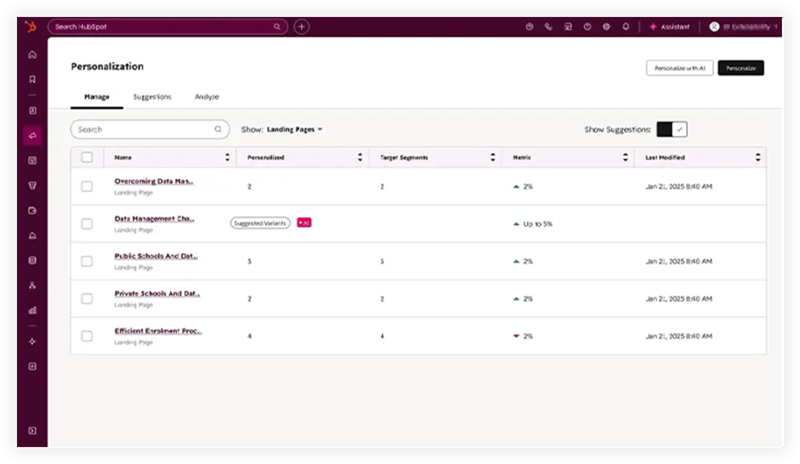
- Customer Agent: Buyers are already using LLMs to research your category. HubSpot's Customer Agent lets them have that same kind of conversation directly on your website from a chat experience that draws on your unique content and data.
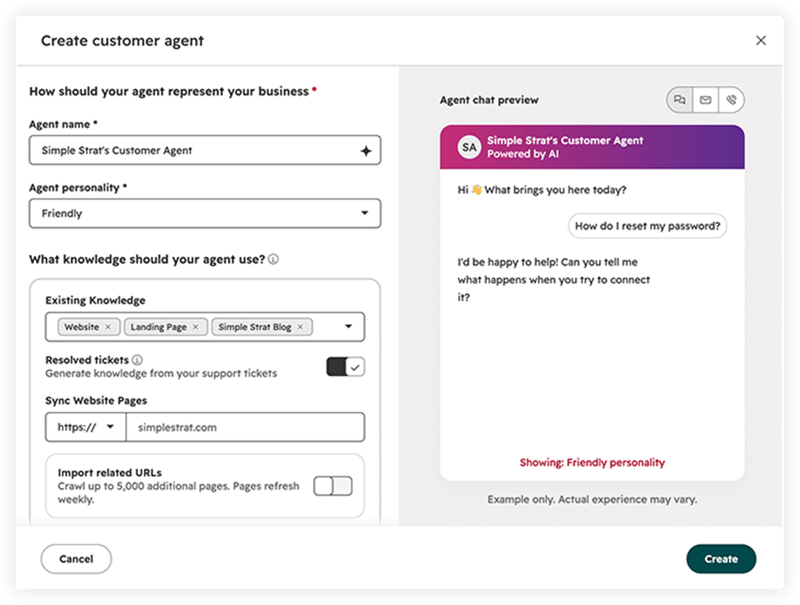
Think about how many of your touchpoints are personalized, and how many are serving the same generic message to everyone. If your website and your CRM are in different systems, the answer is almost always "none of them."
HubSpot is one of the few platforms where Smart CTAs, page personalization, and CRM data are native to the same environment, which is what makes meaningful tailoring possible at scale rather than just in theory.
Amplify: Get Found Where Buyers are Actually Looking
Getting found in 2026 means being present in more places than your website. Buyers are:
- Searching on Google
- Asking questions in ChatGPT and Gemini
- Consuming content across channels
Amplification means showing up across all of those and knowing which ones are driving pipeline.
Here’s how HubSpot helps:
- AEO (Answer Engine Optimization): Getting featured in LLM responses requires many of the same things that help with SEO: clear structure, fresh content, schema markup, strong off-site authority. But LLMs favor content that's specific, well-organized, and clearly attributed to a credible source. That means using clear headings and subheadings, making your main point early in each piece, avoiding content that hides behind JavaScript, and building your brand's presence across channels beyond your website. HubSpot has an AEO optimization tool that will show you how your brand appears across major LLMs and highly actionable recommendations for increasing that visibility.
- Source reporting tied to revenue: Traffic source reports are table stakes. What most teams are missing is the connection between traffic sources and closed revenue. HubSpot's reporting can show you not just where visitors come from, but which sources are generating customers. For example, you might find that a small stream of AI referral traffic generates more revenue than your much larger organic search channel.
- Buyer intent data: HubSpot can identify companies visiting your site before anyone fills out a form, matching IP addresses to company records and flagging accounts actively researching your category. Learn what companies are checking you out, get notifications when someone from a company with an open deal is on your site, and more. Then use that info for better sales outreach and ABM targeting.
Most teams can tell you their top traffic source by volume. Far fewer can tell you which source generated their last ten customers. When your website reporting is connected to your CRM, that answer goes from impossible to table stakes, and it changes where you put your amplification budget entirely.
Evolve: Build a Site that Gets Smarter Over Time
Most websites are static by default. They change when someone has bandwidth, not when the data says they should. In a market where buying behavior is shifting quickly, and competitors can update their positioning overnight, a website that takes weeks to change is a liability.
Evolving your site means two things: having the data to know what needs to change and having the tools to change it fast.
Page-Level Analytics Tied to Your CRM
In HubSpot, every webpage gets the same level of reporting you're used to if you use HubSpot for other channels like email. Get at-a-glance insight into:
- Views
- Form submissions
- New contacts generated
- Customers influenced
You can also go further to build full journey analytics reports that show which pages people visit before filling out a form, or which content gets prospects to respond to sales outreach.
A/B and Adaptive Testing
HubSpot has testing built into website pages and landing pages. You can test a headline, a CTA, or a new layout and get a statistically meaningful result, implement the winner, and test the next thing. Small improvements compounded over time add up to a meaningfully better site.
Marketing Team Agility
How long does it take your team to go from "we should test that" to actually testing it? If the answer involves a developer queue or an IT ticket, your site is already falling behind.
A flexible theme like Clean Pro (our favorite) built specifically for HubSpot gives your marketing team full control over layout and content without touching code, which means the gap between insight and action closes from weeks to hours.
Having the Tools is Not the Same as Using Them
HubSpot is a genuinely powerful platform, but it’s also commonly underutilized. It's one of the most common patterns in B2B marketing: a HubSpot portal full of features that were purchased, onboarded once, and never fully configured.
The Framework Only Works When All Four Parts are Working
Express builds trust. Tailor uses that trust to deliver a more relevant experience. Amplify gets you in front of the right buyers at the right moment. Evolve makes the whole system better over time. When all four are working, your website stops being a cost center and starts being a pipeline driver.
We build B2B websites on HubSpot because it the easiest platform to get all four of these stages working together. If you're ready to see how a HubSpot site can help you build trust faster, convert more of the right buyers, and actually measure the revenue your site is generating, let's talk.

Relevant Blog Posts

Top 26 HubSpot Hacks for Marketing Pros
If you've invested in HubSpot Marketing Hub, you know the promise: powerful growth, streamlined processes, a happy team. But let's be real – there's a TON of info out there on HubSpot. Sorting...
Marketing Collateral: The Ultimate Guide (With Examples)
When we’re talking about marketing, things can get kind of buzz-wordy. Marketing collateral. Landing pages. Audience personas. Ever feel like you need a guide to walk you through these things?...

Using Content for Top-of-Funnel Marketing (Plus Examples)
What does your content have to say? Does it answer your audience’s most burning questions? Does it bring them value after they read, watch, or listen to it? Delivering value via content is especially...
