Project Profile
Designing a Capacity-Based Deal Distribution Model
Simple Strat configured a capacity-based deal routing system in HubSpot using custom user properties and workflow automation, ensuring inbound deals are assigned based on rep availability rather than round-robin defaults.

The Challenge
The client was using HubSpot’s native round-robin to assign closed deals to Account Managers (AMs). While simple, it was too rigid for a growing team with varying experience levels and book sizes.
The system treated every AM equally, regardless of workload, tenure, or revenue responsibility.
This created serious operational risk:
- A senior AM managing $10M in ARR had the same probability of receiving a new account as a newly hired rep with zero clients
- No way to “throttle” assignments based on bandwidth or experience
- Burnout risk for top performers
- Underutilization of new hires
- Leadership lacked flexibility to adapt distribution as capacity shifted
The Solution
We reimagined deal assignment entirely. Instead of a static rotation, we designed a custom object-driven “Book of Business” model powered by a custom-coded workflow action — essentially, an intelligent lottery system.
The Setup
We moved the controls directly into HubSpot so the client could manage everything internally.
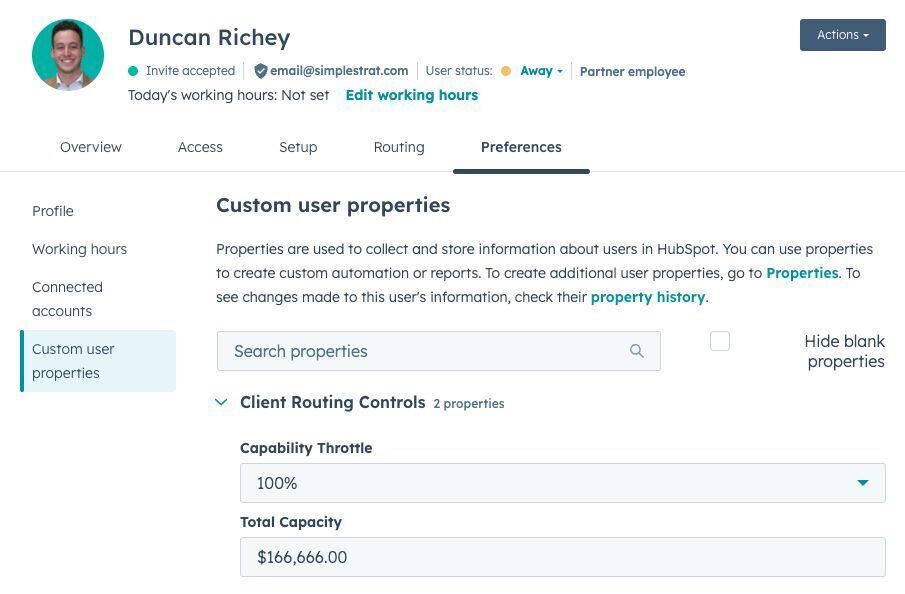
- Created two custom properties on the User object:
- Capacity
- Capability Throttle
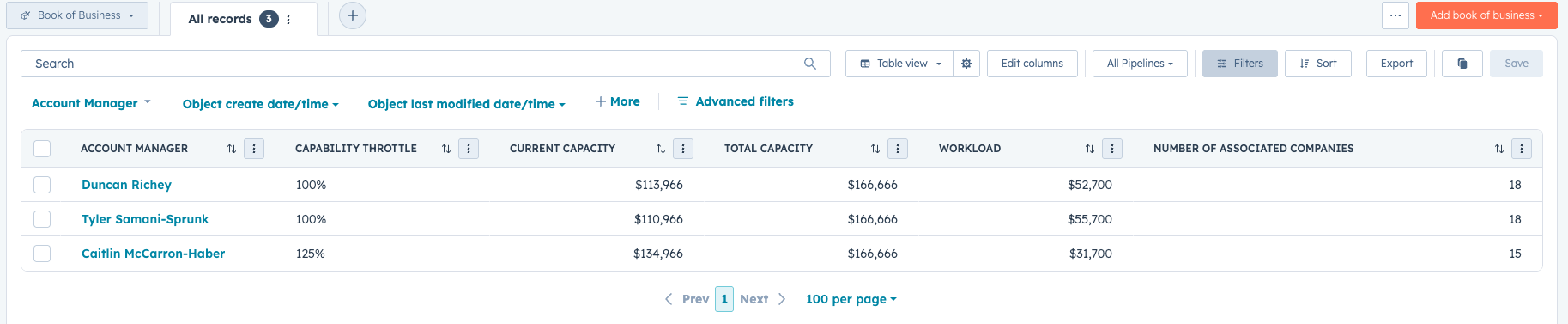
- Built a Book of Business custom object to track:
- Real-time ARR workload
- Company counts
- Active assignments
The Engine
When a deal closes:
- The system calculates each AM’s Current Capacity
- The workflow runs a weighted lottery:
- AMs at 0% capacity are automatically removed from consideration
- If all AMs are at capacity, the system uses an inverse formula to identify the least-overloaded rep
- Assignment is distributed proportionally based on available bandwidth
(Total Capacity – Workload adjusted by Throttle)
Leadership can adjust capacity or throttle directly from the User page in HubSpot, instantly affecting future assignments.
The Impact
The client now has a truly dynamic deal distribution system.
- Leadership can ramp new AMs gradually by increasing their throttle over time
- Senior AMs are protected from overload during high-growth periods
- Workload is balanced in real time based on revenue responsibility and capacity
- Onboarding is smoother, more strategic, and fully controllable
- Deal distribution is no longer blind, it’s capacity-aware
Instead of a rigid rotation, the team now operates on a balanced, intelligent allocation model designed to scale.

FAQ
Does this require custom development?
Yes — but less than you might expect, and it's a one-time build.
This model relies on a custom-coded workflow action, which requires Operations Hub Pro or Enterprise. That means there is a development component to the initial setup. However, once it's built, the system is entirely self-managed by your team through HubSpot.
Leadership adjusts capacity and throttling directly from the User page. No developer needed for day-to-day changes, no separate platform to log into, and no workflow editing every time someone's workload shifts.
The upfront build is the investment. What you get in return is a distribution system that runs automatically, adapts in real time, and lives entirely inside HubSpot.
Can this be adapted if our team structure or capacity rules change over time?
Yes — and that was a core design goal.
One of the limitations of static rotation systems is that they're built for the team you have today, not the team you'll have in six months. This model is different. Capacity limits and throttle settings live on the HubSpot User object, meaning any authorized manager can update them directly without touching the underlying workflow or involving a developer.
Adding a new AM, adjusting a senior rep's ceiling during a high-growth period, or gradually ramping a new hire — all of it happens in HubSpot, in real time, with changes taking effect on the next deal that closes.
How is this different from using a third-party routing tool?
The main difference is where the system lives and who controls it.
Third-party routing tools are powerful, but they introduce a separate platform to configure, maintain, and pay for. Your routing logic lives outside HubSpot, which means changes require jumping between systems and often a dedicated admin who knows the tool well enough to manage it.
This model is built entirely inside HubSpot using custom objects and native workflow infrastructure. There's no additional platform, no separate login, and no recurring per-seat cost for the routing layer itself. Leadership manages everything from the same HubSpot pages they're already working in.
It's also specifically designed for post-close deal assignment to Account Managers — a use case most off-the-shelf routing tools aren't purpose-built for.